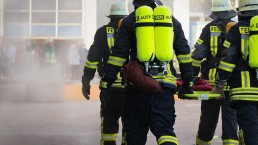
In high-risk industries such as oil & gas, mining, and construction, leaders aren’t chasing flashy technology. They’re pursuing zero incidents, predictable operations, and verifiable compliance.
This is exactly where RTLS and IoT have shifted from experimental initiatives to essential safety-and-efficiency infrastructure. When combined thoughtfully, a real-time location system and industrial IoT network enables HSE teams to prevent incidents, accelerate emergency response, and improve operational efficiency without compromising safety.
Recent studies from safety institutes, global consultancies, and industrial research bodies consistently show measurable reductions in incident rates, search-and-rescue times, and exposure risks when RTLS and IoT systems are deployed at scale.
For HSE leaders accountable for workforce wellbeing and regulatory alignment, this evidence is no longer optional — it’s becoming standard expectation.
Why the RTLS–IoT Convergence Matters for HSE Leaders
HSE operations sit at the sharp intersection of workforce protection, risk visibility, and compliance. Together, RTLS and IoT provide four critical capabilities: 1.
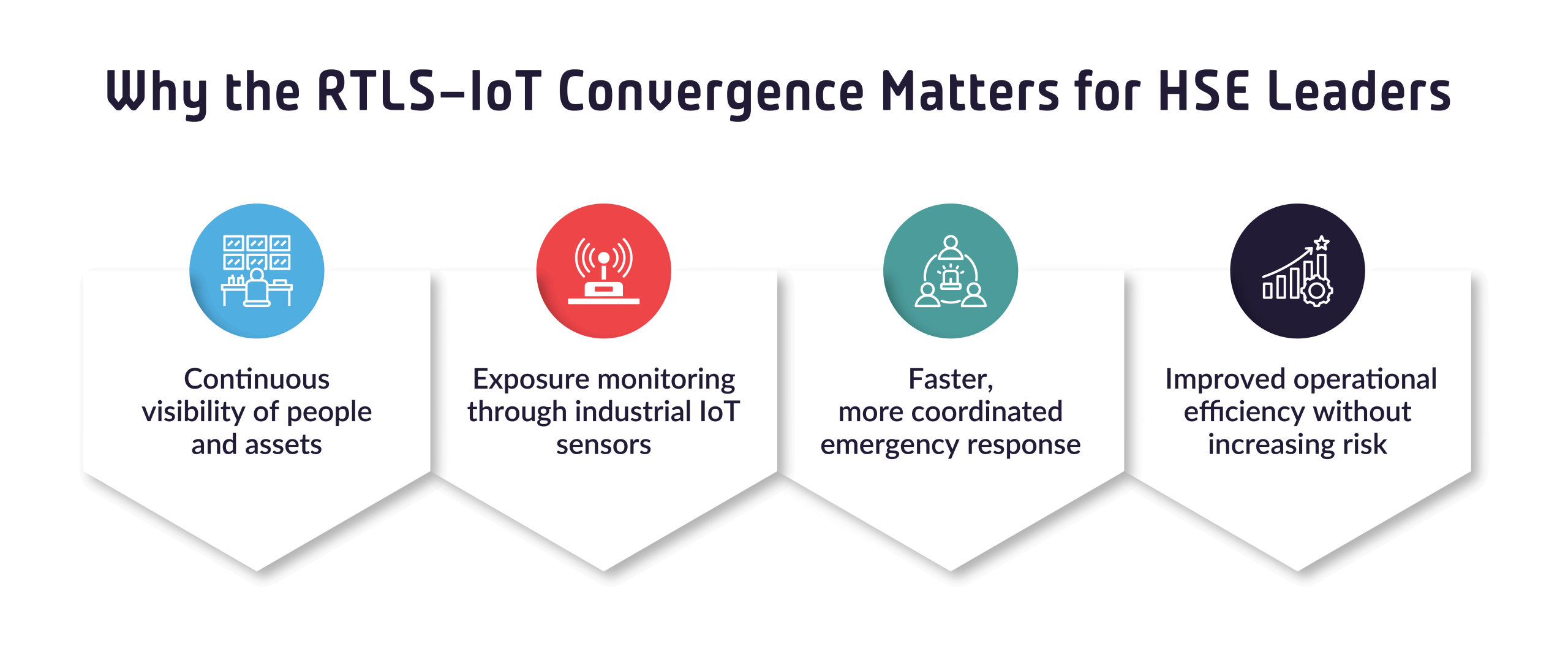
1. Continuous visibility of people and assets
A real-time location system enables supervisors to know the exact location of every worker across large, hazardous, or remote sites. In environments with heavy moving equipment, explosive atmospheres, or underground operations, this visibility is foundational.
2. Exposure monitoring through industrial IoT sensors
Gas leaks, temperature spikes, vibration anomalies, fatigue indicators; industrial IoT sensors detect what humans can’t see quickly enough. IoT telemetry supports proactive interventions rather than reactive investigations.
3. Faster, more coordinated emergency response
With RTLS and IoT feeding live situational data into command centres, emergency teams immediately know exactly who inside restricted zones is, who has evacuated, and where risks are escalating. This shortens response times dramatically and reduces consequence severity.
4. Improved operational efficiency without increasing risk
For HSE leaders, efficiency must never undermine safety. The RTLS–IoT combination enhances operational efficiency by eliminating manual checks, reducing search time, streamlining muster processes, and improving resource allocation — all while strengthening compliance.
Evidence HSE Leaders Can Trust
Across O&G facilities, open-pit mines and construction megaprojects, field studies point to consistent benefits:
- Rapid location tracking has reduced emergency rescue times by double-digit percentages.
- IoT-based environmental monitoring has significantly cut unplanned shutdowns caused by undetected hazards.
- Workforce wearables powered by RTLS and IoT help incident investigation teams shorten root-cause analysis cycles by delivering minute-by-minute movement data.
- Predictive maintenance enabled by industrial IoT reduced high-risk asset failures, directly improving safety KPIs.
These findings align with global safety modernization efforts, reinforcing that digital visibility is no longer a competitive edge; it is a duty of care.
Key Use Cases for Oil & Gas, Mining & Construction HSE Teams
Lone-worker protection
Automated check-ins, fall detection, and immediate geolocation during distress events reduce delays that historically resulted in severe outcomes.
Confined space and hazardous zone monitoring
RTLS and IoT systems enforce geofences, prevent unauthorized entry, and trigger instant alerts when thresholds are crossed.
Evacuation and muster automation
A real-time location system provides real-time headcounts and identifies missing personnel instantly during drills or live emergencies.
Environmental hazard detection
Industrial IoT sensors monitor gas concentration, temperature, pressure, noise levels, and airborne particulates, enabling rapid escalation when conditions degrade.
Heavy equipment interaction prevention
Proximity alerts between workers and vehicles significantly lower collision risks — especially in mining and construction zones with limited visibility.
Deployment Principles for Safety-Critical Sites
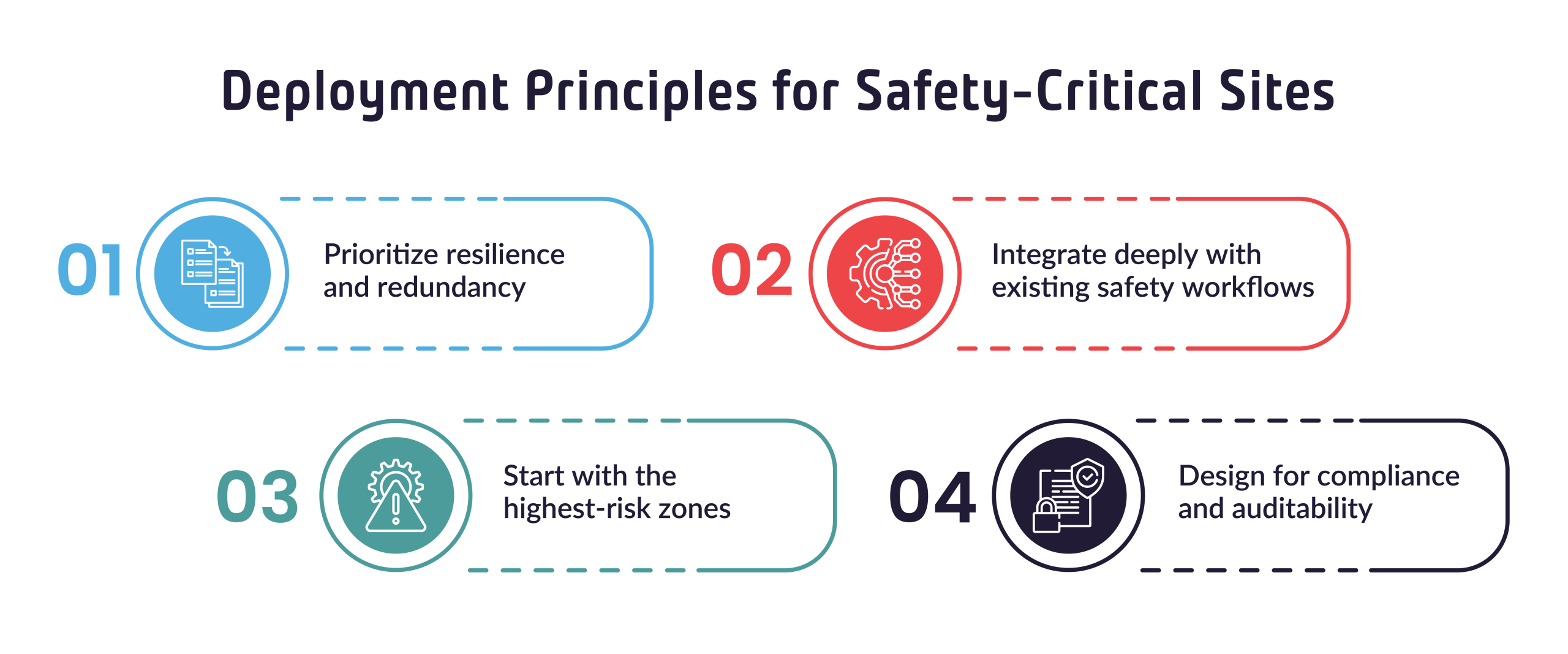
1. Prioritize resilience and redundancy
HSE environments demand RTLS and IoT setups that maintain accuracy despite metal structures, underground tunnels, dust, vibration, or harsh weather.
2. Integrate deeply with existing safety workflows
Systems only work when they become part of daily practice. Integrate with permit-to-work systems, emergency response protocols, and shift planning tools.
3. Start with the highest-risk zones
Confined spaces, wellheads, pits, drilling platforms, and cranes yield fast, measurable wins. Early success builds trust across site leadership.
4, Design for compliance and auditability
Timestamped, accurate location and sensor data strengthen regulatory documentation and reduce friction during audits.
A Strategic Path to ROI and Safer Operations
For HSE leaders, ROI isn’t only financial — it is measured in incidents avoided, compliance strengthened, and workforce wellbeing protected. That said, RTLS and IoT solutions also support clear operational gains:
- Faster shift transitions
- Lower downtime due to avoidable hazards
- More controlled equipment movement
- Reduced insurance and compliance overhead
- Higher workforce productivity through real-time coordination
Adopting these technologies is not a bet for the future. It is an investment in predictable, safe, and efficient field operations.
Real-Time Connectivity is the Future
HSE challenges in oil & gas, mining, and construction will only intensify as operations become larger, deeper, and more complex. Leaders with clear visibility, both spatial and environmental — will outperform those relying on fragmented manual processes.
RTLS and IoT together form a modern safety-and-efficiency backbone: giving HSE leaders real-time intelligence, faster reactions, and a more confident handle on risk. The organizations that adopt early will be the ones that redefine both safety performance and operational efficiency for the rest of the industry.
See how Tracklynk turns RTLS and IoT data into real operational gains.
Book a product demo today and stay ahead with workforce safety.